

Ivanna KLYMPUSH-TSINTSADZE
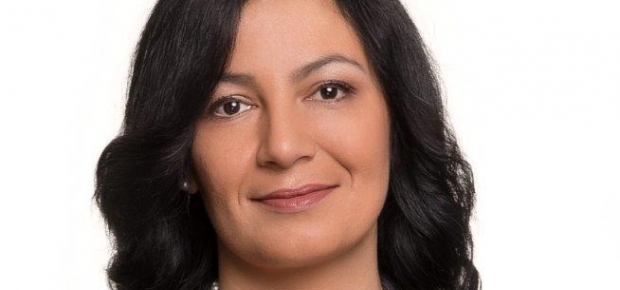
Ivanna Klympush-Tsintsadze is a Vice Prime Minister for European and Euro-Atlantic integration. Since 2014, before being appointed to this post, she was a Member of the Ukrainian Parliament, serving as the First Deputy Chairperson of the Foreign Affairs Committee and leading Ukraine’s Parliamentary Delegation to the NATO Parliamentary Assembly.
Prior to her election as a Member of Parliament and since mid-2011, Mrs. Tsintsadze was heading Yalta European Strategy (YES) - an independent international network promoting the development of fair, democratic and prosperous Ukraine. Since October 2007, Ivanna worked as a Deputy Director of Programs, and later – as a Director of the International Charitable Organization “Open Ukraine Foundation”.
For 5 years between 2002 and 2007, Mrs. Klympush-Tsintsadze was the Radio BBC Ukrainian Service correspondent in the USA (Washington D.C.) and in the Caucasus (Tbilisi). From 1998 till 2002, she worked for the East-West Institute’s Kyiv Center as a Project Manager and carried out the responsibilities of EWI KC’s Acting Director for one year. Ivanna began her career in 1993 year as a Project Manager at the Ukrainian Center for Independent Political Research (UCIPR) in Kyiv, and later became the Head of the Department of International Relations in UCIPR.
Mrs. Klympush-Tsintsadze has a bachelor’s degree and a master’s degree in International Relations from Taras Shevchenko National University (1998). In 1992, she completed the course “History of Ukraine. Ukrainian Literature” at summer school of Harvard Ukrainian Research Institute of Harvard University (USA). Ivanna is co-editor of the book “Black Sea Region: Cooperation and Security Building”.